Vår plats
304 North Cardinal St.
Dorchester Center, MA 02124

304 North Cardinal St.
Dorchester Center, MA 02124
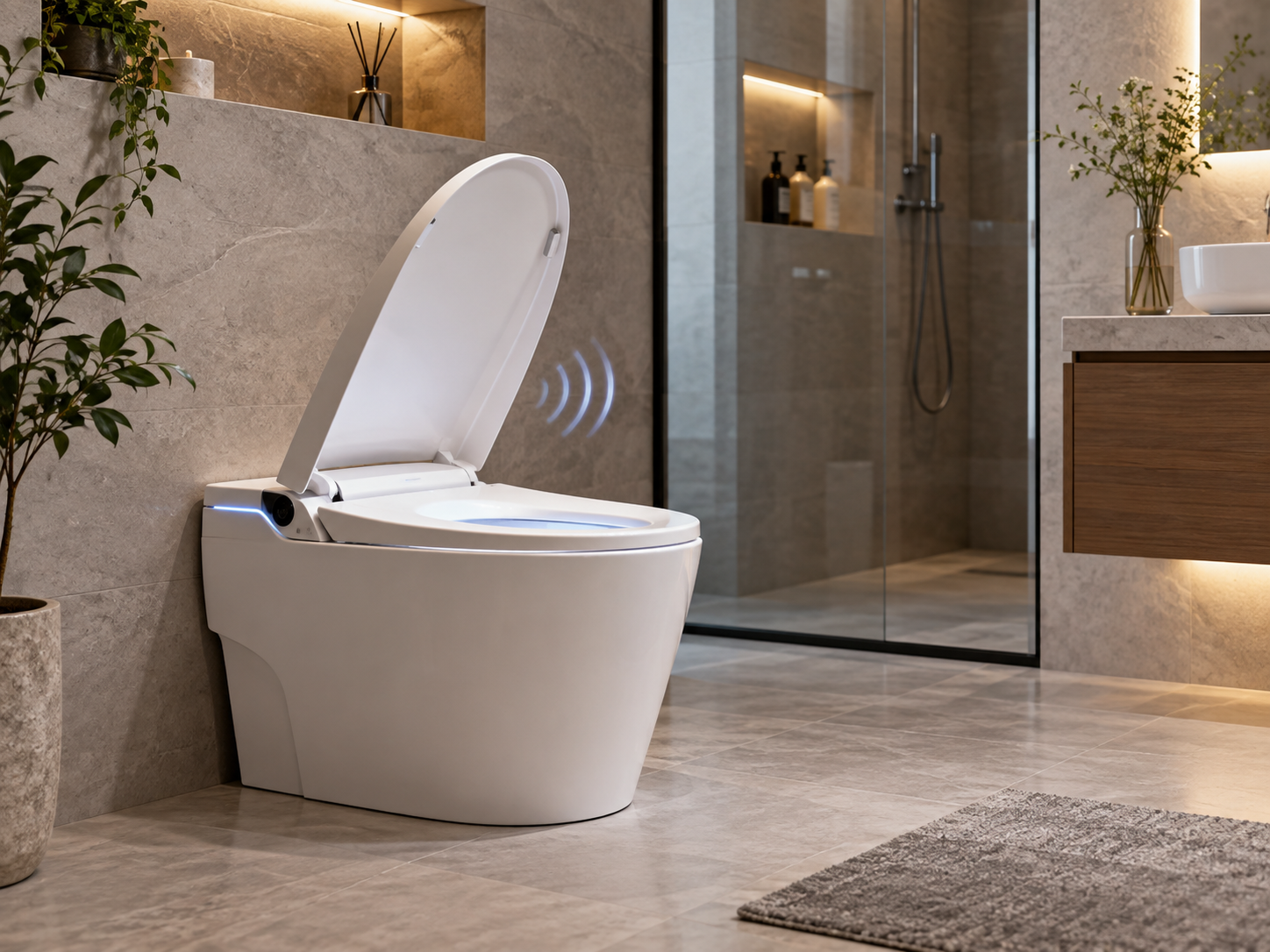
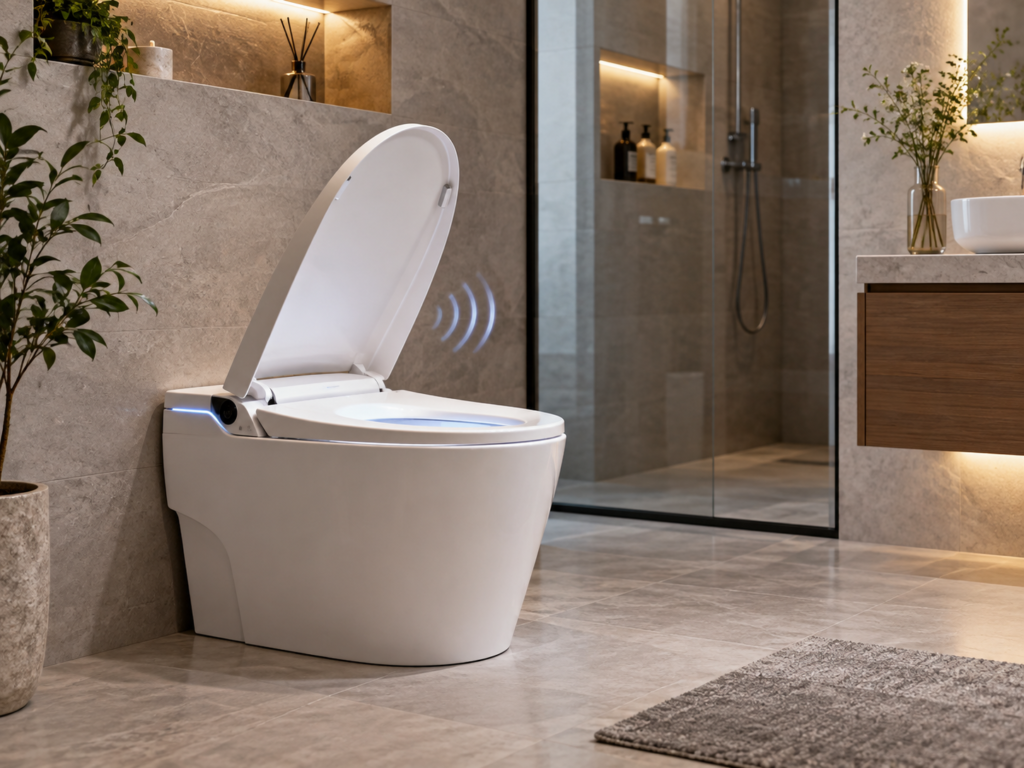
Smart toilets are evolving from simple bidet products into integrated bathroom systems that combine automatic flushing, washing, heating, sterilization, sensors, remote control, and increasingly, Röststyrning med AI.
For distributors, sanitary ware brands, hotels, apartment projects, and bathroom retailers, voice-controlled smart toilets can provide a clear product differentiation opportunity. However, the words “AI Voice Control” alone do not tell buyers enough about how the product actually works.
Before importing or private-labeling a voice-controlled smart toilet, buyers should understand:
This guide explains the key points B2B buyers should evaluate before selecting an AI voice control smart toilet.
An AI voice control smart toilet integrates a voice recognition module into the electronic control system.
Instead of using only a remote controller or side buttons, the user can activate supported functions through spoken commands.
Depending on the model, voice commands may control functions such as:
The available commands depend on the toilet’s control board, firmware, and voice module.
For distributors, it is important to request the actual voice command list rather than assuming every electronic function can be operated by voice.
Not necessarily.
Many smart toilets use offline local voice recognition.
In this type of system, commands are processed inside the toilet’s voice module without requiring:
This can be particularly suitable for bathrooms because installation is simpler and basic toilet functions do not depend on internet availability.
Some higher-level smart bathroom systems may also support:
However, distributors should confirm exactly which connectivity features are included in the product.
Do not assume that “AI voice control” means the toilet works with Alexa, Google Home, or another smart-home platform unless this capability has been specifically confirmed.
Voice control is not only a marketing feature.
It can improve usability in several situations.
Users can control important functions without touching the remote controller or side panel.
This can improve convenience and reduce unnecessary contact with bathroom controls.
Voice commands can be easier for some elderly users than finding small buttons on a remote control.
Users with reduced mobility may benefit from controlling functions without reaching for a panel or remote.
For luxury villas, high-end apartments, hotels, and premium bathroom showrooms, voice interaction adds a stronger smart-home experience.
For distributors, voice control can help distinguish premium product lines from entry-level smart toilets.
However, the usefulness of voice control depends heavily on recognition accuracy and the simplicity of the command system.
When comparing voice-controlled smart toilets, buyers should evaluate the entire smart toilet platform rather than focusing only on voice recognition.
A proximity sensor can detect when a user approaches the toilet.
Depending on the configuration, the toilet may automatically:
Voice control may also allow the user to control these functions manually.
Buyers should confirm:
These details matter in small bathrooms where people frequently walk close to the toilet.
Automatic flushing is one of the most important functions in a smart toilet.
The system may trigger flushing through:
Having multiple flushing methods provides redundancy and improves usability.
Rear washing usually allows adjustment of:
Some models also offer oscillating or massage washing modes.
For OEM projects, distributors should decide how many adjustment levels are needed.
Feminine washing uses a dedicated nozzle position or spray pattern designed for personal hygiene.
Buyers should confirm whether the product uses:
Many modern smart toilets use instant heating rather than storing a large amount of heated washing water.
Advantages may include:
The heating power should match the voltage requirements of the destination market.
Seat heating is usually adjustable through several temperature levels.
For distributors selling into different climates, it can be useful to offer:
Warm air drying reduces the need for toilet paper after washing.
Important parameters include:
Foot sensors are especially popular because users can control some functions without touching the toilet.
Depending on the model, foot sensing may control:
This feature is commonly combined with voice control.
Some premium models use ultraviolet treatment around the washing nozzle or nozzle area.
Buyers should confirm exactly:
Avoid treating “UV sterilization” as a universal specification because designs vary between manufacturers.
A foam shield system creates a layer of foam on the surface of the bowl water.
Depending on the design, it may help reduce:
For markets targeting premium smart toilet consumers, foam shield systems can provide an additional product differentiation feature.
Some smart toilets activate a deodorization system when the user sits down.
For distributors, important questions include:
A low-level LED night light makes the toilet easier to locate in dark bathrooms.
For premium models, ambient lighting may also be incorporated into the body design.
Most offline voice-controlled smart toilets include a dedicated microphone and voice recognition module.
The general process is:
1. User speaks an activation phrase
The system enters listening mode.
2. The user gives a supported command
Till exempel:
“Open the lid.”
“Flush.”
“Rear wash.”
“Stop.”
3. The voice module identifies the command
The system compares the audio with its programmed command library.
4. The control board activates the corresponding function
The relevant motor, valve, pump, heater, or electronic component operates.
This process typically happens quickly.
Many systems require a wake-up phrase before accepting commands.
Till exempel:
Hello Smart Toilet
The actual phrase varies according to the voice module and OEM configuration.
Some systems remain active for several seconds after being awakened, allowing multiple commands without repeating the wake-up phrase.
For distributors, the wake-up phrase should be confirmed during sample testing.
Language is one of the biggest issues when importing voice-controlled smart toilets.
A voice module designed for one market may not be appropriate for another.
Possible languages may include:
Availability depends on the specific voice platform.
Before placing an order, distributors should confirm:
Sample testing by native speakers is strongly recommended.
Because smart toilets combine ceramic sanitary ware, electronics, heating systems, water valves, sensors, and flushing systems, proper installation is essential.
Unlike conventional toilets, most full-function smart toilets require electrical power.
Confirm:
Common market configurations include:
110–120V / 60Hz
and
220–240V / 50Hz
Never send a 220V configuration into a 110V market without confirming compatibility.
OEM orders should be configured according to the destination country’s electrical system.
The electrical outlet should be properly grounded and suitable for use in a bathroom environment.
The exact installation and protection requirements must follow applicable local electrical regulations.
For project orders, electricians should confirm the installation before toilets are delivered.
The toilet requires a clean water inlet.
Buyers should confirm:
Water pressure requirements vary according to flushing architecture.
Some voice-controlled toilets use direct-pressure flushing.
Others include:
For regions with unstable or low water pressure, a built-in tank model may be more appropriate.
One of the most common purchasing mistakes is ignoring the rough-in.
Confirm:
Common dimensions vary by market.
Therefore, distributors should tell the manufacturer the destination country before selecting models.
Automatic lid-opening toilets require adequate clearance.
Buyers should consider:
Automatic sensors may also require adjustment in very compact bathrooms.
This should be checked before placing a bulk order.
An advanced smart toilet should still provide a method of flushing when power is unavailable.
Possible solutions include:
Different manufacturers use different systems.
The distributor should test emergency flushing during sample evaluation.
Water quality can affect long-term reliability.
Sediment, scale, rust, and impurities may affect:
For markets with hard water, buyers should ask about:
These factors can significantly influence after-sales performance.
One of the main advantages of working directly with a smart toilet manufacturer is the ability to configure products for different markets.
Branding may be applied to:
Logo application methods depend on the material and required appearance.
For supported voice modules, OEM projects may select the voice language according to the destination market.
For larger projects, the command set may also be customized depending on development requirements.
Not every market needs every function.
Distributors can create different versions.
Add:
Add:
This allows distributors to build several price levels around the same general product platform.
Possible options can include:
Color availability and MOQ should be confirmed with the factory.
Remote control customization may include:
For large OEM programs, customized remote-control design may also be possible.
Private-label packaging may include:
For e-commerce distribution, additional packaging protection may be required.
Manuals should be adapted to the destination market.
Important information includes:
Translations should ideally be reviewed by a native speaker.
A sample should be tested comprehensively before a purchase order is confirmed.
Check:
Bathrooms can contain noise from:
Voice recognition should therefore be evaluated in realistic conditions.
Approach the toilet repeatedly from different directions.
Check for:
Test under different water pressure conditions.
Evaluate:
Evaluate:
Check:
Inspect:
Turn off power and confirm the available flushing method.
Smart toilets contain more components than traditional ceramic toilets.
Distributors should therefore establish a spare-parts strategy before launching the product.
Common spare parts include:
Ask the manufacturer whether individual components can be replaced without replacing the complete toilet.
For large distributors, keeping commonly used replacement parts locally can greatly improve customer service.
Certification requirements vary by destination country and product configuration.
Smart toilets combine plumbing and electrical systems, so buyers should determine applicable requirements before mass production.
Depending on the market, compliance considerations may involve:
The required documents should be confirmed according to the destination country and sales channel.
Do not assume one certification package is suitable for every market.
Before requesting a quotation, distributors should prepare:
Destination Market
Country or region.
Order Quantity
Sample quantity and expected bulk order.
Voltage
110–120V or 220–240V.
Frequency
50Hz or 60Hz.
Plug Standard
Specify destination-market plug.
Drainage
S-trap or P-trap.
Rough-In
Required installation distance.
Water Conditions
Available pressure and flow.
Voice Language
English, Spanish, German, Arabic, etc.
Functions
Specify required smart functions.
Color
White, black, gray, or customized.
Logo
Private-label requirements.
Packaging
Standard export carton or customized packaging.
Manual Language
Specify required language.
Certification
List destination-market requirements.
Giving this information to the supplier can significantly improve quotation accuracy.
These products can be particularly suitable for:
Voice control provides a clear premium feature for product differentiation.
Private-label brands can create a premium smart bathroom collection.
High-end hotels may use smart toilets to enhance guest-room bathroom experiences.
Voice control and automatic functions fit well with broader smart-home systems.
Premium villas often prioritize comfort, automation, and design.
Voice interaction creates a strong demonstration experience in retail displays.
The term AI can be used very broadly.
Buyers should focus on measurable functions:
A voice-controlled product has limited value if the target customer cannot use the commands naturally.
A premium smart toilet still needs suitable:
Voice recognition should always be tested before a bulk order.
Smart toilets are electronic products as well as sanitary ware.
After-sales planning should begin before the first shipment.
AI voice control is becoming an important feature in premium smart toilets, but distributors should evaluate the complete product rather than focusing on the voice function alone.
A suitable product should combine:
For B2B buyers, installation compatibility is equally important.
Before placing an order, confirm:
A carefully configured smart toilet can reduce installation problems while helping distributors create a differentiated product range.
We supply smart toilets for distributors, sanitary ware brands, hotels, apartment projects, and bathroom retailers.
Available OEM and ODM options may include:
Send us your destination country, required quantity, voltage, rough-in size, voice language, and required functions for product recommendations and factory quotation.
Contact us for specifications, samples, OEM options, and bulk pricing.
